The first time we saw a five-story structure going up on the filled lands near Sydney Harbour, we knew standard compaction wouldn't cut it. The fill was a mix of dredged material, old colliery waste, and loose sand dating back decades. Cape Breton's industrial past left a patchwork of ground conditions that can't be ignored. Vibrocompaction design steps in precisely where surface rollers reach their limit. The process densifies granular soils at depth, reducing the risk of settlement before the footings are even poured. For sites along the Sydney coalfield or near the Bras d'Or Lake shoreline, understanding the pre- and post-compaction state is what separates a stable project from one plagued by differential movement. A thorough in-situ permeability assessment often precedes the design phase, especially where groundwater fluctuates with the tides.
Effective vibrocompaction design in Cape Breton means reading the glacial history of the site before turning on the vibroflot.
Process and scope
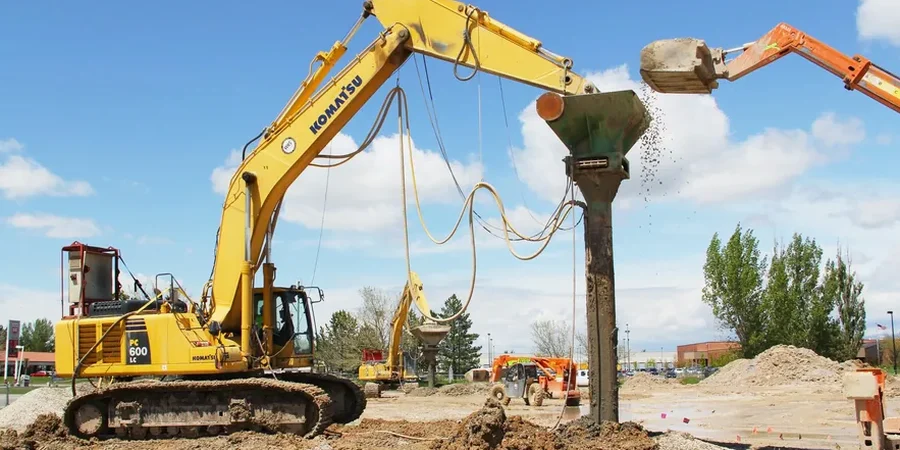
Local context
Cape Breton sits at roughly 46 degrees north latitude, where freeze-thaw cycles reach a meter deep in some winters. That seasonal movement is predictable. What isn't predictable is how loose backfill from the 1920s will behave under seismic loading. The 1929 Grand Banks earthquake, magnitude 7.2, was felt across the island and triggered underwater landslides. A modern event of similar scale could liquefy loose saturated fills in the Sydport area or along the Esplanade. Without proper vibrocompaction design, these soils lose strength when shaken, and the consequences for port infrastructure or waterfront buildings are severe. The design phase includes estimating the cyclic stress ratio the soil must resist, then specifying the compaction grid to achieve that resistance. It's not just about settlement; it's about preventing a sudden loss of bearing capacity when the ground starts moving.
Reference standards
NBCC 2015 (Part 4 – Structural Design), CSA A23.3:2014, ASTM D6066 – Standard Practice for Determining the Normalized Penetration Resistance of Sands for Evaluation of Liquefaction Potential
Related services
Pre-Treatment Site Characterization
We map the subsurface using CPT soundings and test pits to identify the extent of loose granular layers before designing the compaction grid. Knowing where the old buried channels or mine tailings sit avoids surprises once the vibroflot is on site.
Post-Treatment Verification Testing
After compaction, we remobilize the CPT rig to confirm densification at every probe location. The before-and-after comparison quantifies the improvement and validates the design assumptions for the geotechnical engineer of record.
Typical parameters
Questions and answers
What kind of soils around Cape Breton can be treated with vibrocompaction?
The method works best on clean granular soils with less than 15 percent fines. The glacial outwash sands and gravels found near the Mira River or the sandy fill at the Sydport industrial park are good candidates. Silty glacial till from the Escuminac Formation usually requires a different approach, like stone columns, because the fines dampen the vibration transmission.
How long does a typical vibrocompaction design and verification program take?
Design and site characterization usually take two to three weeks. The field compaction itself might run one to two weeks depending on the grid size and depth. Post-treatment verification with CPT adds another three to five days on site, plus a week for laboratory analysis and reporting.