Foundation engineering in Cape Breton represents far more than simply placing concrete in the ground. It encompasses a comprehensive discipline of geotechnical investigation, structural load analysis, and adaptive design strategies tailored to one of Canada's most geologically diverse island settings. From the historic coastal communities of Sydney and Glace Bay to the developing inland corridors around Baddeck, every structure relies on a foundation system that has been carefully matched to subsurface conditions. The category of foundations in this region covers shallow footings, deep pile foundation design, raft slabs, and specialized retention systems, all governed by the imperative to safely transfer structural loads to competent bearing strata while resisting the aggressive environmental forces typical of Atlantic Canada.
Cape Breton's geology presents a complex tapestry that directly influences foundation design decisions. The island forms part of the Appalachian physiographic region, underlain predominantly by Carboniferous sedimentary rocks including sandstones, shales, and conglomerates of the Morien and Pictou groups, with significant coal measures that historically drove the region's industrial development. Glacial till deposits of variable thickness blanket much of the bedrock, creating heterogeneous soil profiles that can range from dense basal tills to softer ablation tills with pockets of stratified sands and silts. Coastal areas frequently encounter marine clays and sensitive silts that exhibit challenging behaviour under load, while the Bras d'Or Lake lowlands feature compressible organic soils in many locations. This geological variability demands rigorous site investigation programs before any foundation type can responsibly be specified.
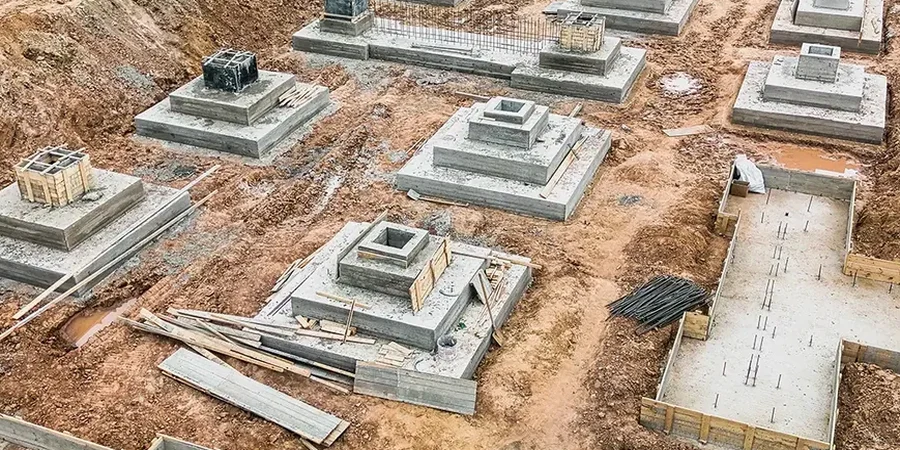
Regulatory compliance in Cape Breton follows the National Building Code of Canada as adopted and amended by the Province of Nova Scotia, specifically the Nova Scotia Building Code Regulations. Foundation design must satisfy Part 4 of the NBCC for structural design, which references CSA A23.3 for concrete foundations and CSA S16 for steel components. Geotechnical investigations are governed by the Canadian Foundation Engineering Manual and must adhere to professional practice standards established by Engineers Nova Scotia. Of particular relevance locally is Section 9.15 of the NBCC for prescriptive residential foundations, though engineered designs are required where expansive soils, slopes exceeding 1:10, or high groundwater tables are present. The province also enforces specific requirements for coastal erosion setbacks and flood hazard zones under the Municipal Government Act, directly impacting foundation elevations and scour protection measures along Cape Breton's extensive shoreline.
The types of projects requiring professional foundation services in Cape Breton span the full spectrum of construction activity. Residential developments, particularly those on the steep slopes overlooking the Cabot Strait or along the Mira River, frequently demand engineered pile foundation design to address slope stability concerns and variable overburden depths. Commercial and institutional buildings in urban centres like Sydney must contend with adjacent structure impacts and often require underpinning or shoring systems during excavation. Infrastructure projects, including highway bridge abutments and marine terminals critical to the island's fishing and tourism economy, rely on deep foundation solutions capable of resisting both compressive and lateral loads. Even modest cottage constructions in the Cape Breton Highlands National Park periphery necessitate careful foundation planning to minimize environmental disturbance while ensuring structural resilience against the region's notorious wind and freeze-thaw cycles. Each project type brings unique performance requirements that only a thorough understanding of local ground conditions can satisfy.
Available services
Questions and answers
What geotechnical factors most commonly influence foundation design in Cape Breton?
Glacial till variability, shallow bedrock depth, and marine clay deposits are the primary geotechnical factors affecting foundation design across Cape Breton. Glacial tills range from dense and competent to loose and saturated within short distances, while bedrock can be near surface or buried beneath compressible soils. Coastal areas frequently contain sensitive marine clays prone to settlement and strength loss when disturbed, requiring thorough site investigation before foundation type selection.
How do Nova Scotia building regulations affect foundation construction on Cape Breton Island?
Nova Scotia Building Code Regulations adopt the National Building Code of Canada with provincial amendments, requiring Part 4 engineered design for foundations on slopes, in flood zones, or where soil bearing capacity is questionable. Engineers Nova Scotia mandates geotechnical investigations following the Canadian Foundation Engineering Manual, and coastal properties face additional Municipal Government Act requirements for erosion setbacks and minimum foundation elevations above projected flood levels.
When is a deep foundation like piling necessary instead of a shallow footing in Cape Breton?
Deep foundation systems become necessary when competent bearing strata lie too deep for conventional footings, when surface soils are highly compressible or organic, or when slope stability concerns preclude shallow excavation. Coastal and waterfront sites with soft marine deposits, hillside developments with steep gradients, and structures with significant lateral load requirements typically demand pile foundations to transfer loads to bedrock or dense till at depth.
What role does frost action play in Cape Breton foundation design?
Frost action is a critical design consideration throughout Cape Breton due to the region's extended winter season and frequent freeze-thaw cycles. Foundation elements must extend below the expected frost penetration depth, typically 1.2 to 1.5 metres locally, to prevent frost heave damage. Proper drainage, insulation, and backfill materials are equally important to mitigate the effects of frost on shallow foundations and grade beams.