Ground improvement in Cape Breton encompasses a comprehensive suite of geotechnical engineering techniques designed to enhance the mechanical properties of native soils, rendering them suitable for construction. This category is not limited to a single method but covers the evaluation, design, and execution of solutions that increase bearing capacity, reduce settlement, and mitigate liquefaction potential. In a region where competent bedrock is often masked by thick deposits of glacial till, marine clays, and organic silts, the ability to engineer the ground itself is fundamental to project viability. From major highway interchanges in the Cape Breton Regional Municipality to waterfront industrial expansions along Sydney Harbour, these methods directly address the risks posed by weak, compressible, and variable subsurface conditions, ensuring long-term structural integrity and public safety.
The local geology of Cape Breton presents a distinctive set of challenges that make ground improvement a critical consideration. The island's overburden is a legacy of the Wisconsinan glaciation, leaving behind a complex stratigraphy of stony lodgment till, glaciofluvial sands, and deep basins of post-glacial marine silt and clay, particularly in low-lying areas around the Bras d'Or Lake and former river estuaries. These fine-grained soils, often normally consolidated, are susceptible to significant long-term settlement under load. Furthermore, the region sits within the Northern Appalachian seismic zone, where a moderate earthquake risk necessitates the assessment of soil liquefaction in loose, saturated granular deposits. Addressing these conditions often requires specialized analysis and the application of in-situ densification or reinforcement techniques rather than simple over-excavation.
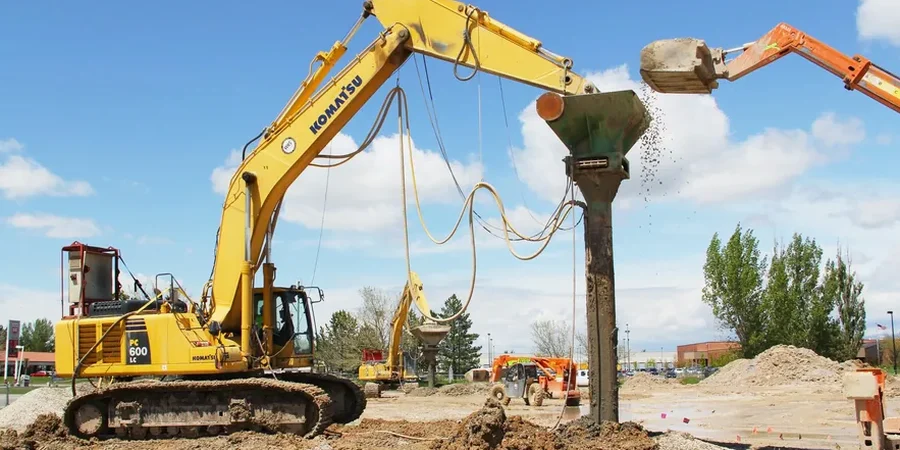
All ground improvement design and execution in Cape Breton must adhere to the national framework provided by the National Building Code of Canada (NBC), as adopted and enforced by the Province of Nova Scotia. The primary geotechnical standard is the Canadian Foundation Engineering Manual (CFEM), which outlines rigorous protocols for site investigation, design philosophy based on Limit States Design (LSD), and verification testing. For projects involving deep vibratory techniques, specialized design often references the criteria established in Canadian Highway Bridge Design Code (CHBDC) for transportation structures. Crucially, any ground improvement strategy must be validated by a robust quality assurance program, typically involving post-treatment cone penetration testing (CPT) or standard penetration testing (SPT) to confirm that performance objectives, such as a specified relative density for densified sands, have been achieved before foundation construction can commence.
The types of projects that demand ground improvement in Cape Breton are diverse, ranging from large-scale public infrastructure to commercial and industrial developments. Wind farm construction on the island's highlands frequently requires stabilization of access roads and turbine foundations over compressible organic terrain. Port and marine terminal upgrades, such as the expansion of container facilities in Sydney, rely heavily on techniques like stone column design to support heavy crane loads and pavement systems over soft marine clays. Similarly, the construction of large-footprint commercial buildings and water treatment plants on reclaimed or low-lying land often necessitates the use of vibrocompaction to densify loose sand fills, eliminating the risk of differential settlement. Residential subdivisions planned on marginal land are also increasingly triggering the need for engineered ground solutions to meet stringent municipal settlement criteria.
Available services
Questions and answers
What are the primary indicators that a building site in Cape Breton might require ground improvement?
Key indicators include the presence of soft, compressible soils like marine clay or peat, a high water table, and loose granular fills. A geotechnical investigation revealing low Standard Penetration Test (SPT) N-values, predicted settlement exceeding project tolerances, or a factor of safety against bearing capacity failure below code requirements all signal a need for engineered ground improvement before foundation construction can safely proceed.
How does ground improvement differ from deep foundation systems like piling?
Ground improvement treats the soil mass in-situ to enhance its properties, creating a composite ground material that directly supports shallow foundations or slabs-on-grade. Deep foundations, like driven piles, bypass the problematic soil entirely, transferring loads to a deeper, competent stratum. The choice between them depends on the depth and nature of the weak soils, structural loads, and overall project economics.
What role does the National Building Code of Canada play in ground improvement projects locally?
The NBC, as adopted by Nova Scotia, establishes the overarching performance requirements for safety, serviceability, and structural integrity. It mandates that all foundation designs, including those on improved ground, adhere to Limit States Design principles from the Canadian Foundation Engineering Manual. Compliance is demonstrated through site-specific geotechnical design reports and rigorous post-construction verification testing to validate the achieved ground conditions.
Is ground improvement a permanent solution, or does the soil condition degrade over time?
When properly designed and verified, ground improvement provides a permanent, long-term solution. Techniques like vibrocompaction and stone column installation densify and reinforce the soil, creating a stable, frictional composite that does not degrade under static loads. The key to permanence is a thorough design that accounts for long-term groundwater conditions and a comprehensive quality control program that confirms the design criteria are met in the field.