Geotechnical laboratory testing forms the backbone of any successful construction or infrastructure project in Cape Breton, providing the critical data needed to understand soil and rock behavior under real-world conditions. This category encompasses a comprehensive suite of physical and mechanical tests performed on soil, aggregate, and bedrock samples recovered from field investigations. In a region defined by its complex glacial history and variable terrain, laboratory analysis moves beyond visual classification to deliver quantifiable parameters such as grain size distribution, plasticity, shear strength, and consolidation potential. Without this level of scrutiny, designs for foundations, roadways, and earthworks would rely on assumptions that risk costly failures or overly conservative engineering. For local contractors, consultants, and municipal authorities, accessing a qualified geotechnical laboratory ensures that projects from Sydney to Inverness are grounded in verifiable material properties rather than generalized textbook values.
The surficial geology of Cape Breton Island is dominated by a legacy of Wisconsinan glaciation, which left behind a heterogeneous mantle of glacial till, glaciofluvial sands and gravels, and glaciomarine silts and clays. These deposits often exhibit erratic layering, with sensitive fine-grained soils in low-lying areas near the Bras d'Or Lakes and denser, boulder-rich tills capping the highlands. Laboratory testing is indispensable here because the depositional environment directly influences engineering behavior: a seemingly stiff clay may be prone to sudden strength loss upon remolding, while a well-graded gravel could contain just enough fines to compromise drainage. A precise grain size analysis (sieve + hydrometer) reveals the full particle size distribution, distinguishing true clean sands from gap-graded mixtures that can densify unexpectedly under vibration. This level of detail is not merely academic; it dictates excavation support design, compaction specifications, and even the long-term maintenance burden for highway embankments traversing the island's undulating topography.
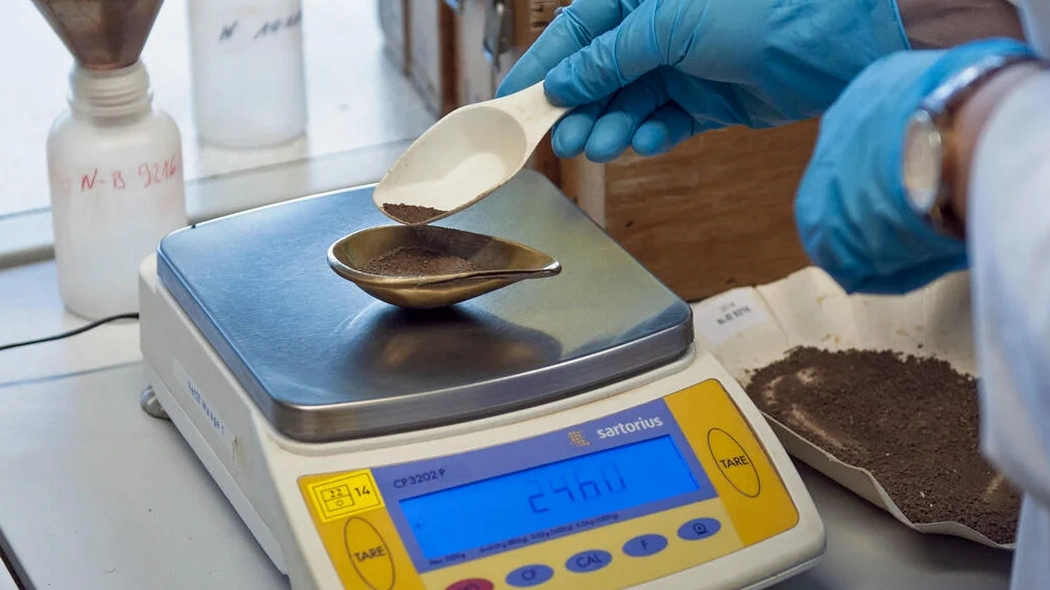
Canadian geotechnical laboratory practice is governed by nationally recognized standards, primarily those published by the Canadian Standards Association (CSA) and the Bureau de normalisation du Québec (BNQ), which are referenced in the National Building Code of Canada and provincial transportation specifications. On Cape Breton, Nova Scotia Department of Public Works (NSTIR) standards often mandate ASTM International test methods as well, ensuring consistency across jurisdictions. Laboratories performing tests for public infrastructure must adhere to rigorous quality control protocols, including proper sample storage, calibrated equipment, and participation in proficiency testing programs. The determination of Atterberg limits is a prime example of a standardized procedure that carries immense practical weight; the liquid limit, plastic limit, and plasticity index of fine-grained soils directly correlate with swell potential, frost susceptibility, and the capacity to support pavement structures through freeze-thaw cycles that are harsh in the Cape Breton climate. Adherence to these standards transforms raw soil into reliable design inputs for geotechnical engineers.
The types of projects that demand comprehensive laboratory testing in Cape Breton are diverse, spanning both private development and public infrastructure. Residential subdivisions in expanding communities like Baddeck require foundation assessments where consolidation and strength tests prevent differential settlement on compressible lacustrine clays. Wind farm developments on the island's exposed ridgelines depend on rock core testing to anchor turbine bases in fractured metamorphic bedrock. Highway twinning projects, coastal erosion protection structures, and municipal water and sewer upgrades each trigger a tailored suite of laboratory analyses. A contractor placing engineered fill for a commercial building cannot rely on field observation alone; laboratory compaction curves and grain size analysis establish target moisture and density values that field technicians verify with nuclear density gauges. Similarly, the renovation of historic masonry structures in Sydney's North End often requires mortar and stone characterization to match repair materials to the original fabric, preventing accelerated weathering at the interface. In every case, the laboratory serves as the bridge between subsurface uncertainty and engineered certainty.
Questions and answers
What is the typical turnaround time for geotechnical laboratory tests in Cape Breton?
Turnaround times vary depending on the test type and sample condition. Standard classification tests like grain size analysis and Atterberg limits are often completed within five to seven business days, provided samples are received in an undisturbed state. Consolidation or triaxial shear tests require longer curing and loading periods, typically extending to two or three weeks. Expedited testing is often available for critical path construction items.
How should soil samples be handled before delivery to a laboratory on Cape Breton?
Undisturbed samples, typically collected in thin-walled Shelby tubes, must be kept upright, sealed with wax or plastic caps, and stored in a humid environment away from freezing or extreme heat. Disturbed samples in jars or bags should be double-bagged and labeled clearly with the project name, borehole number, depth, and date. Chain of custody documentation must accompany all samples to maintain traceability and meet Nova Scotia regulatory expectations.
Which laboratory tests are most critical for road construction projects in Cape Breton?
For road construction, grain size analysis is fundamental to evaluate granular base and subbase materials against NSTIR gradation bands. Atterberg limits determine the plasticity of subgrade soils, which influences frost heave susceptibility. Compaction testing using standard or modified Proctor methods establishes target density and moisture content. California Bearing Ratio (CBR) tests may also be required to assess subgrade strength for pavement thickness design.
Do geotechnical laboratories in Cape Breton follow specific accreditation requirements?
Yes, laboratories serving public infrastructure projects in Nova Scotia are generally required to hold accreditation to ISO/IEC 17025 through the Standards Council of Canada or an equivalent body. This accreditation confirms technical competence for specific test methods. Additionally, laboratories must participate in the Canadian Council of Independent Laboratories (CCIL) proficiency testing programs for soils and aggregates to maintain qualified status with provincial transportation authorities.