The first thing you notice on a Cape Breton deep foundation site is the sound. Not the pile hammer—the glacial till. It’s dense. It’s unpredictable. We’ve pulled up granite cobbles the size of a truck tire from 12 meters down near Sydney River. That’s why pile foundation design here can’t rely on desktop assumptions. Before any structural engineer locks in a pile type or length, we verify the subsurface profile with a combination of borings and lab testing. In the Membertou area, we often pair pile design with a grain size analysis to confirm the matrix composition of tills that control side friction. The ground in Cape Breton doesn’t read textbooks. It reads like a glacial history. Our job is to translate that into a foundation that performs for 50 years.
Pile design in Cape Breton is a negotiation with glacial geology. You don’t win by assuming—you win by testing.
Process and scope
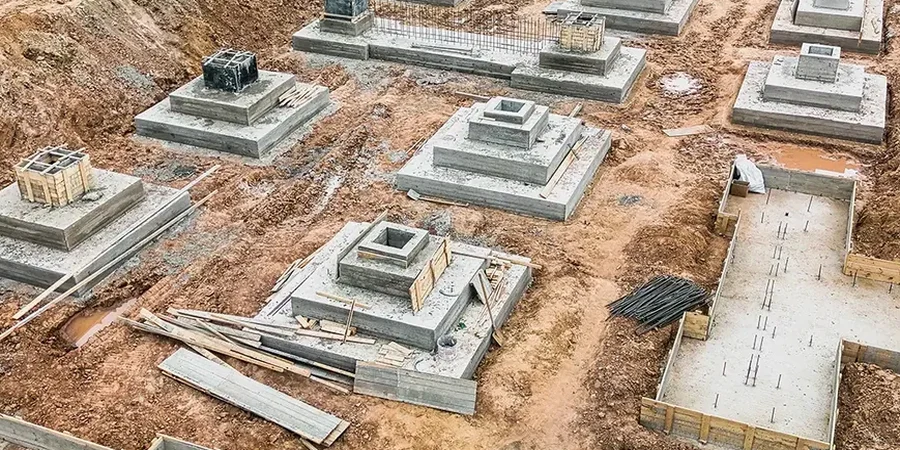
Local context
A five-story residential project in downtown Sydney specified 20-meter driven H-piles based on a preliminary report. We were retained for verification. Our borings revealed a 3-meter lens of loose saturated silt at 11 meters depth, directly above the design bearing stratum. That lens was not in the original geotechnical model. Under seismic loading per NBCC 2020, that layer would have liquefied, eliminating skin friction and risking pile buckling. We redesigned the piles to bypass the lens entirely and increased the section modulus. The client absorbed a six-week redesign but avoided a structural failure that would have cost millions. In Cape Breton, skipping a detailed pile foundation design investigation is not a shortcut—it’s a liability.
Reference standards
The design and testing of pile foundations in Cape Breton shall comply with NBCC 2020 (National Building Code of Canada), CSA A23.3:19 (Design of Concrete Structures), ASTM D1143 (Standard Test Methods for Deep Foundation Elements Under Static Axial Compressive Load), the CFEM – Canadian Foundation Engineering Manual (4th Ed.), and ASTM D3966 (Standard Test Methods for Deep Foundation Elements Under Static Lateral Load).
Related services
Axial and Lateral Pile Analysis
We compute ultimate and serviceability limit states for single piles and groups using LPILE, GROUP, and APILE. Input parameters come from our own lab tests, not regional defaults. We verify shaft resistance in till, end bearing on bedrock, and lateral deflection under wind and seismic loads per NBCC 2020.
Pile Integrity and Load Testing
We specify and supervise static load tests, high-strain dynamic testing (PDA), and low-strain integrity tests (PIT). In Cape Breton’s bouldery till, we often recommend re-strike analysis 7–14 days after driving to assess setup effects before structural connections.
Typical parameters
Questions and answers
What pile types are most common in Cape Breton glacial soils?
Driven H-piles and drilled shafts dominate. H-piles handle boulders well and can be driven to refusal on bedrock. Drilled shafts work better near existing structures where vibration is a concern. We also specify micropiles for underpinning in tight access sites like downtown Sydney basements.
How does NBCC 2020 affect pile design in Cape Breton?
NBCC 2020 introduced updated seismic hazard values for Eastern Canada, including Cape Breton. Site Class determination is critical—soft clay sites amplify ground motion more than dense till. We use shear wave velocity data (MASW or downhole) to assign the correct Site Class before computing seismic lateral loads on piles.
What is the typical cost range for pile foundation design in Cape Breton?
Do we need a pile load test or can we rely on static formulas?
Static formulas (alpha, beta, Nordlund) are useful for preliminary sizing, but NBCC and CFEM strongly recommend load testing for Category 3 and 4 geotechnical projects. In Cape Breton’s variable tills, we typically specify at least one static load test or high-strain dynamic test to calibrate the design. The savings from optimized pile lengths usually pay for the testing program.