Cape Breton Island sits on a foundation of Carboniferous sedimentary rock, predominantly sandstone, shale, and gypsum sequences of the Windsor Group. These formations, shaped by 300 million years of Atlantic tectonics, create a challenging environment for any excavation deeper than three meters. In downtown Sydney, the glacial till overburden can vary from a few meters to over 15 meters deep, with perched groundwater tables that appear unexpectedly after heavy rain events. Our monitoring approach starts with a detailed baseline survey, because around here, the ground doesn't always read the textbook. When an excavation cuts into the Bras d'Or Lakes lowlands, you're dealing with compressible marine silts that demand continuous observation; a single undetected movement can cascade into a slope failure. For projects near former coal mine workings, we often pair the instrumentation plan with a grouting reconnaissance to seal potential collapse zones before the shoring goes in.
In Cape Breton's Windsor Group formations, gypsum dissolution can create hidden voids behind shoring walls that only long-term inclinometer trends will reveal.
Process and scope
Local context
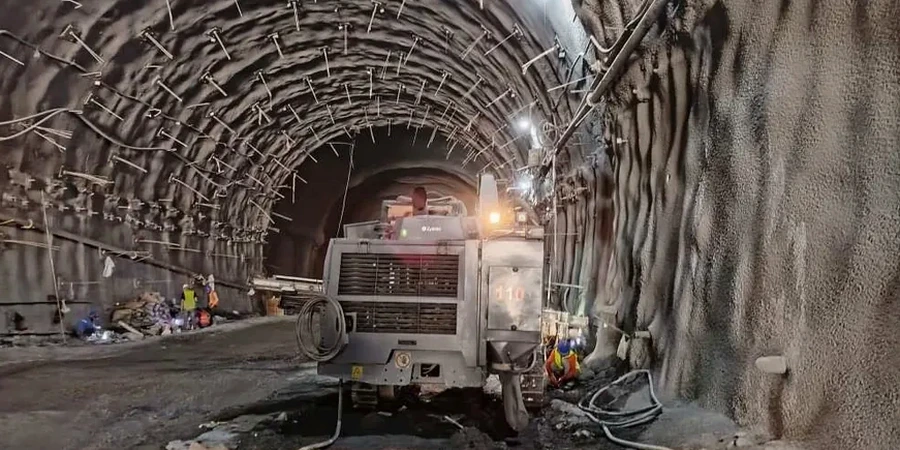
The most common surprise in Cape Breton excavations is the intersection of abandoned coal mine entries from the late 19th century. In the Glace Bay and New Waterford areas, historical mine maps are notoriously inaccurate; a backhoe can punch through a hidden shaft without warning. What we've seen repeatedly is that the risk isn't the void itself, it's the sudden loss of groundwater into the old workings, which lowers the local water table and triggers consolidation settlement in the surrounding neighborhoods. A solid monitoring program catches the early signs: an unanticipated drop in piezometric level combined with lateral displacement in the inclinometer profile. Another local pattern is frost action from January through March, when the upper two meters of till can heave overnight and throw off surface settlement readings. The solution is to extend the inclinometer casing three meters below the frost line and to reference all surface measurements to deep benchmarks socketed into competent sandstone.
Reference standards
Geotechnical excavation monitoring in Cape Breton adheres to ASTM D6230-13 for inclinometer monitoring, ASTM D7299-12 for vertical inclinometer probe, ASTM D6026-13 for data reporting precision, CSA Z797 for temporary works and excavations, and NBCC 2015 Division B Part 4 for excavation safety.
Related services
Deep Excavation Monitoring
Continuous inclinometer and piezometer arrays for cuts exceeding 4.5 meters, with automated SMS alerting when deflection rates exceed project-specific thresholds.
Adjacent Building Condition Surveys
Pre-construction crack mapping and vibration monitoring for heritage structures in Sydney's North End, using triaxial geophones per DIN 4150-3 guidelines adapted for local wood-frame construction.
Mine Void Detection & Monitoring
Downhole camera inspection and time-domain reflectometry (TDR) cables installed in boreholes to detect progressive roof collapse in abandoned coal seams beneath the excavation footprint.
Typical parameters
Questions and answers
How often should excavation monitoring readings be taken in Cape Breton?
For active cuts in the Sydney area, we typically log inclinometer and piezometer data four times daily during the excavation phase. Once the final grade is reached and the permanent structure begins to rise, the frequency drops to once per day for two weeks, then twice weekly until backfilling is complete. Projects near sensitive heritage buildings or within 30 meters of the Bras d'Or Lakes shoreline may require continuous real-time monitoring with hourly uploads, especially during spring thaw when groundwater pressures peak.
What does geotechnical excavation monitoring cost for a typical Cape Breton project?
Why is gypsum dissolution a concern for excavation monitoring in Cape Breton?
The Windsor Group contains massive gypsum beds that dissolve slowly when exposed to fresh groundwater circulation. During an excavation, dewatering can accelerate this process, creating cavities behind the shoring that are invisible from the surface. Standard inclinometer readings might remain stable until the void reaches a critical size, then the wall deflects suddenly. That's why our monitoring protocol in gypsum zones includes periodic downhole sonar scans in the bedrock anchors, looking for changes in the cavity profile that precede any measurable movement in the wall itself.